
Author: A-Po 阿潑
Translated by: Shi-Liu
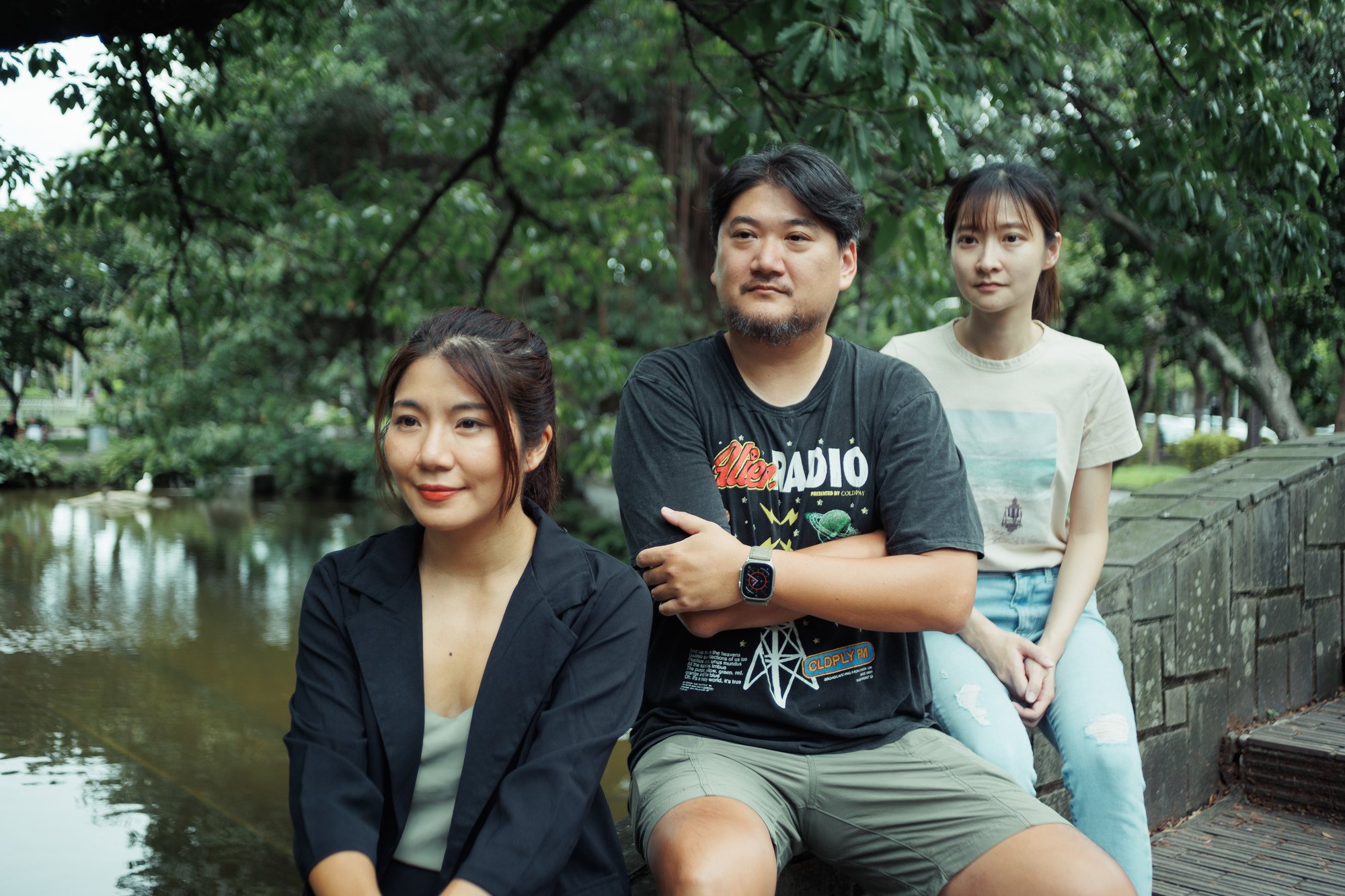
Three Tears in Borneo creative team, from left: producer Lin Chia-Ru, director Sun Chieh-Heng, and screenwriter Tsai Yu-Fen. (Photo by Cheng Yu-Chen)
“Close your eyes and listen carefully to the sound of the surging sea. Doesn’t it sound exactly like the waves in the Haidan (“sea urchin”) caves back home? Every time you hear the sound of the sea, you return to your hometown, and you won’t be afraid anymore.” In the miniseries Three Tears in Borneo (its name means “Listening to the Ocean Waves” in Taiwanese Taigi), a Taiwanese Prisoner of War (POW) camp guard uses these words to comfort a fellow countryman in Borneo (a large island located between the South China Sea and the Java Sea).
Hái-íng (海湧, as what is included in the title of this miniseries) is the Taiwanese (Hokkien) word for “ocean waves.”
Three Tears in Borneo is Taiwan’s first World War II suspense drama. In August 2024, marking the 79th anniversary of the end of the war, a group of filmmakers brought to light a little-known chapter of wartime history in the form of drama, which is blended with real historical events and the emotional struggles of humanity. During World War II, many young Taiwanese men were conscripted by the Japanese colonial government and sent to Borneo to serve as guards overseeing Allied prisoners of war. On the eve of Japan’s defeat, they became embroiled in a series of brutal massacres. Then, after the war, they were brought to international military tribunals and prosecuted by Allied prosecutors for the abuse of POWs.
The Taiwanese who were sent abroad during the war endured unimaginable hardships, longing to return home. However, they remained stranded on a foreign island even after surviving the war, awaiting the verdict of the Allied forces. Whether they could go home or not was no longer up to them...
“Eighty years ago, these young Taiwanese men were taken into the tropical jungle without knowing where the journey would end. One can only imagine how overwhelming the feeling of isolation and unfamiliarity they must have endured. The ocean might have been their only source of solace.”
Director Sun Chieh-Heng explains the symbolism behind the title Three Tears in Borneo in this way. In preparation for the series, he traveled to Borneo for field research and discovered that the island is vastly different from Taiwan in terms of their cultures and languages. The tropical rainforest vegetation, in particular, was a kind of untamed wilderness unfamiliar to most Taiwanese.
“I imagine that when those Taiwanese men stationed in the Borneo camps faintly heard the sound of ocean waves filtering through the trees, it was similar to the sound they would have heard on the beaches of their hometown in Kaohsiung,” Sun said. For him, the sea is what connects everything. In a foreign and unfamiliar land, the sound of waves might have been their only comfort. For those Taiwanese men stranded on a distant land during the war, their only goal was to survive, and their only wish, to return home.
Although research, creative works, and documentaries on Taiwanese soldiers in the Japanese army (during the Japanese occupation) have accumulated since the lifting of martial law, very few films and television programs focus specifically on Taiwanese POW camp guards and the postwar trials they faced. Three Tears in Borneo fills this gap. The creative team traces the experiences of these guards, examining their roles as collaborators in the abuse and massacre of prisoners of war. Through the Allied postwar trials of Taiwanese war criminals, the series sheds light on the wartime circumstances of Taiwanese individuals and the complexities of their shifting identities—caught between the statuses of a defeated and a victorious nation. In other words, Three Tears in Borneo uses the medium of drama to revisit history, bringing up the moral and political questions about wars while challenging the perceived truth and justice.
Because the story is grounded in history, the story naturally weaves in the real-life experiences of historical figures. For the creative team behind Three Tears in Borneo, the primary reference was Ke Ching-Hsing, a guard at the Kuching POW camp who was once sentenced to death by a war tribunal. But after a dramatic turn of events, he survived and returned to tell his story.
The 120,000 Taiwanese Who Followed the Rising Sun Flag (the flag of the Imperial Japanese military)
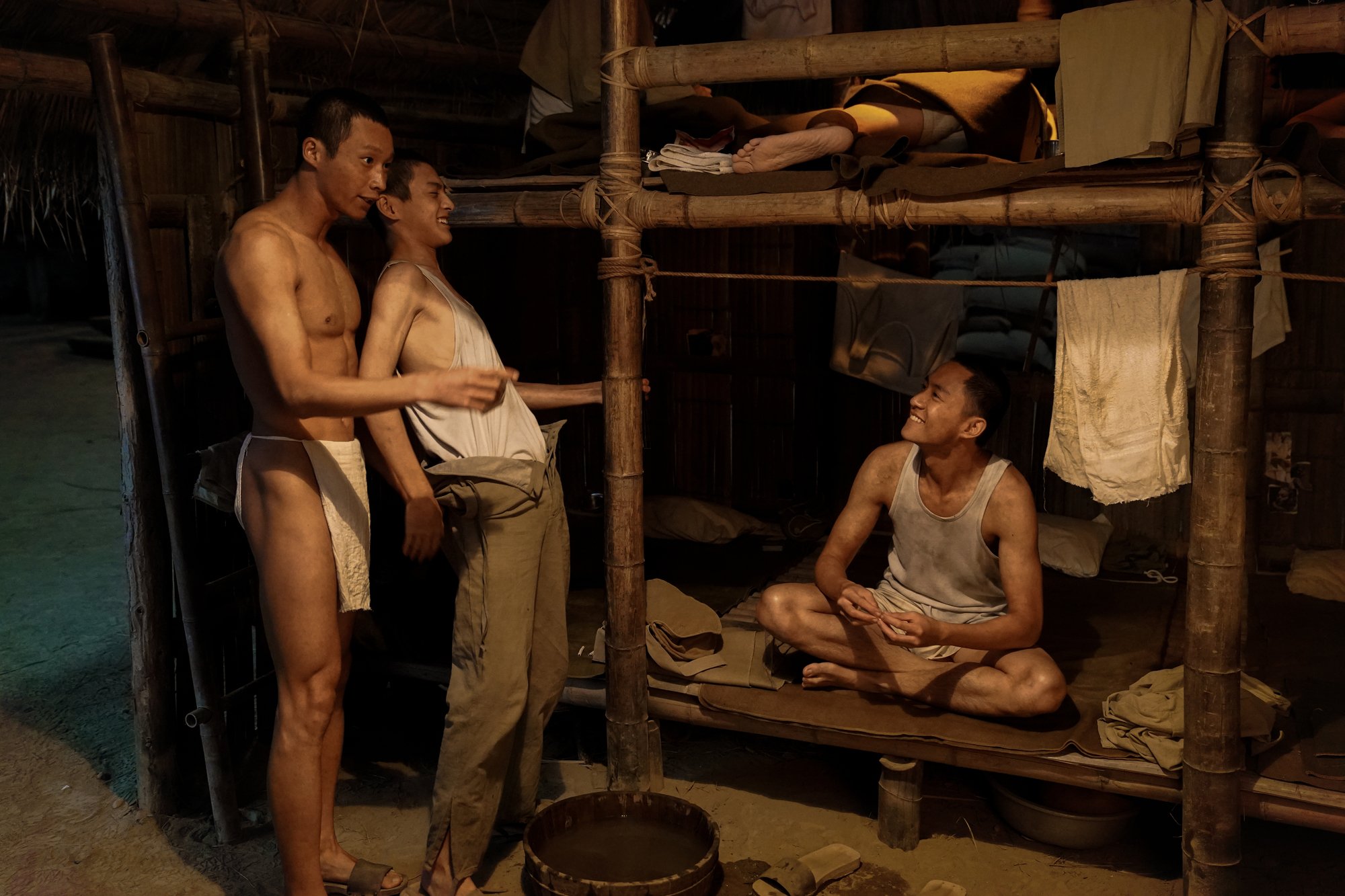
In Three Tears in Borneo, the Taiwanese POW guard brothers, Rong-Hui, De Zai, and A-Yuan from left to right; A-Yuan’s character is based on the real-life story of Ko Ching-Hsing. (Image courtesy of Public Television)
In December 1941, the Pacific War broke out. At the request of the Japanese military, the Taiwan Governor General’s Office conscripted 200,000 Taiwanese to support the war effort. Some became official “Japanese soldiers,” but many more were employed in non-combatant roles, contributing labor and assistance to the war.
Ko Ching-Hsing was from Hemei in Changhua. His father was a tenant farmer. Hoping to improve his family’s financial situation, he signed up when the Imperial Subject Public Service Association began recruiting “POW camp guards.” It was 1942, and he was only 22 years old.
At the time, Japan was rapidly occupying territories across the western Pacific and had captured over 350,000 Allied soldiers. Bound by the Geneva Conventions, which prohibited the killing of prisoners of war, the Japanese military confined them in 104 POW camps across Asia. The prisoners were forced into labor—constructing camps, airfields, and other military infrastructure. The POW camp guards, such as Ko Ching-Hsing, were known as “gunzoku”—non-combatant military affiliates who supported the armed forces in auxiliary roles. It is estimated that there were around 120,000 Taiwanese gunzoku during World War II.
Although gunzoku were not formal members of the military, they were still subject to the military’s strict hierarchical system. At times, they had to endure slaps or beatings from their superiors and were often forced to carry out orders to beat or abuse prisoners of war. Ko Ching-Hsing, who served as a “chief POW guard” at the Kuching POW camp in North Borneo, often found himself caught in a painful dilemma, torn between obeying orders and feeling sympathy for the prisoners.
As the tide of war began to turn, the Japanese military’s supply lines in the South Pacific were cut off by the Allied forces. In March 1945, rumors of an impending Allied landing in North Borneo reached the Japanese military. To prevent the prisoners of war from becoming a burden, they launched what came to be known as the “Death Marches,” reduced the prisoners’ food rations, abandoned the sick and weak, and even carried out mass executions of POWs—including those held at the camp where Ko Ching-Hsing served as a guard.
Although Ko Ching-Hsing objected because the army violated international conventions, his superior, Sugita Tsuruo, insisted on carrying out the order. He even threatened the Taiwanese POW camp guards—who were neither soldiers nor had ever killed anyone—with a gun, forcing them to execute 46 Allied prisoners who had survived hunger and the grueling marches.
Forced to follow orders, Ko Ching-Hsing closed his eyes and pulled the trigger, disregarding the plead of the weak and unarmed prisoners of war. After the killings, the prisoners’ bodies were buried, and all related records and evidence at the camp were destroyed.
According to statistics, the death rate of the 350,000 Allied POWs held by the Japanese on the Pacific front reached 27%, a figure seven times higher than the death rates in POW camps run by the Allies in Germany and Italy.
The POW Guards Who Killed Under Imperial Orders: When Their Roles Were Suddenly Reversed
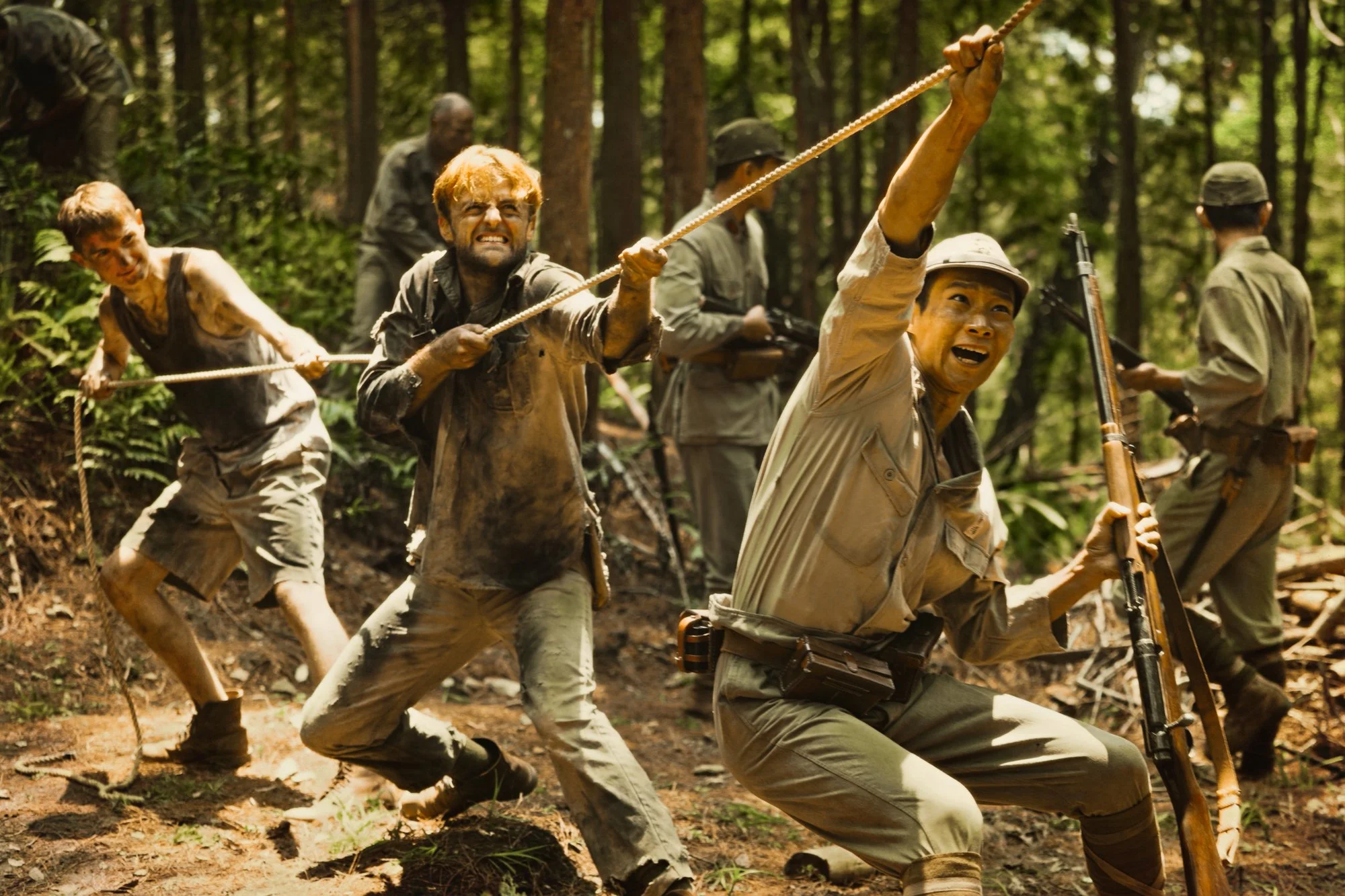
Foreign prisoners of war forced into labor in Three Tears in Borneo. (Image courtesy of Public Television)
At the end of 1945, three months after the war had ended, the remaining Japanese troops hiding in the jungles of Borneo finally surrendered upon learning of Japan’s defeat. The roles of Ko Ching-Hsing and his fellow guards suddenly changed—they went from being POW camp guards to prisoners of war themselves, and were detained by the Allied forces on Labuan Island, now part of Malaysia. As POWs, they not only faced retaliatory beatings from the Allies but were also subject to trial by Allied military tribunals.
The Allied forces classified war criminals into Classes A, B, and C. Class A war criminals were those responsible for initiating wars, such as former Japanese Prime Minister Hideki Tojo, and were charged with "crimes against peace" in the Tokyo Trials. Class B and C war criminals referred to officers or soldiers who committed atrocities during the war, prosecuted under charges of “conventional war crimes” or “crimes against humanity,” and tried by military tribunals set up by individual Allied nations. Ko Ching-Hsing, who had worked at a POW camp in Borneo, was classified as a Class C war criminal and was prosecuted and tried by the Australian military tribunal.
According to the Australian war crimes tribunal records, Ko Ching-Hsing, who was tried under the Japanese name Kawamura Teruhoshi, was initially sentenced to death. However, after appealing the verdict, his case was retried when Sugita Tsuruo later changed his testimony and admitted that he had personally ordered the execution of the POWs. Ko Ching-Hsing’s life was spared, and his sentence was reduced to 10 years in prison.
When the Allied trials happened, Ko Ching-Hsing became aware that Taiwan had already “changed hands” and was under the control of the Republic of China. He diligently studied Mandarin while in prison. Yet it wasn’t until his release and return home in 1953 that he truly felt how much the “nation” had changed—he had gone from being a “soldier fighting for the Empire” to a politically sensitive “accomplice of an enemy state.” For decades afterward, he lived under constant surveillance and harassment by the security agencies of the Republic of China.
Not until Taiwan’s democratization in the 1990s did these former Taiwanese soldiers in the Japanese army, who were silenced for nearly half a century and obscured by history’s fog, begin to present in contemporary society, thanks to researchers’ interviews and archival excavations. Ko Ching-Hsing’s story has been retold by numerous scholars and writers; even Lung Ying-Tai (a well-known Taiwanese writer) mentions him briefly in Big River, Big Sea — Untold Stories of 1949. Lung wrote that at the end of the war, this Taiwanese guard saw Mrs. Chao Shih-Ping, wife of the Republic of China’s consul in North Borneo, Cho Huan-Lai, struggling alone to care for her two young children under the harsh conditions of the POW camp. Out of compassion, he saved up his own rations, traded cigarettes for eggs, and secretly provided those to Mrs. Chao and her children.
Grateful for Ko’s kindness, Chao Shih-Ping made it clear that her descendants must one day repay Ko. So, when Cho Huan-Lai’s niece read about Ko Ching-Hsing’s story in a book and realized he was the man who had helped her family, she immediately flew from the United States across the Pacific to Changhua to personally visit the 90-year-old elder.
It was January 2010. Just three months later, Ko Ching-Hsing passed away. With his final breath, that war and the generation it shaped faded into history.
In the instant the old photo was taken, they went from being Japanese to becoming citizens of the Republic of China.
Though the time (of Japanese occupation) passed, “history” is still presented in particular forms. The original inspiration for the creative team behind Three Tears in Borneo came from a passage taught across several generations in postwar national education and history textbooks: on October 25, 1945, Chen Yi, the Governor General of Taiwan Province, accepted the surrender of the Japanese military in Taiwan at the Taipei City Public Auditorium.
The Taipei Public Auditorium was originally built to commemorate the enthronement of the Shōwa Emperor of Japan. But after World War II, the building became the symbolic site marking the sunset of the Japanese Empire’s colonial rule over Taiwan. Its commemorative focus shifted to the Republic of China’s “Father of the Nation,” and the building was renamed Zhongshan Hall.
In 2018, filmmakers Sun Chieh-Heng, Tsai Yu-Fen, and others were attending a VR workshop held at Zhongshan Hall as part of the Taipei Film Festival. As they anxiously searched for a topic for their VR project, Sun Chieh-Heng glanced up at the crystal chandelier hanging from the ceiling and it sparked an idea. He suddenly remembered the photo of the surrender ceremony from their history textbooks.
“In that surrender ceremony, aside from the representatives on stage, there was a large, shadowy crowd of onlookers off to the side—very blurry. They were probably Taiwanese, right? After that day, they stopped being Japanese and became Chinese. I wonder what they were feeling at that moment?”
Inspired by this thought, Sun Chieh-Heng and his collaborators developed a story set against the backdrop of the surrender ceremony about a secret plot by the Japanese military to bomb the venue the day before the event. Their project, titled The Explosion on the Eve of Surrender, received considerable recognition at the film festival that year.
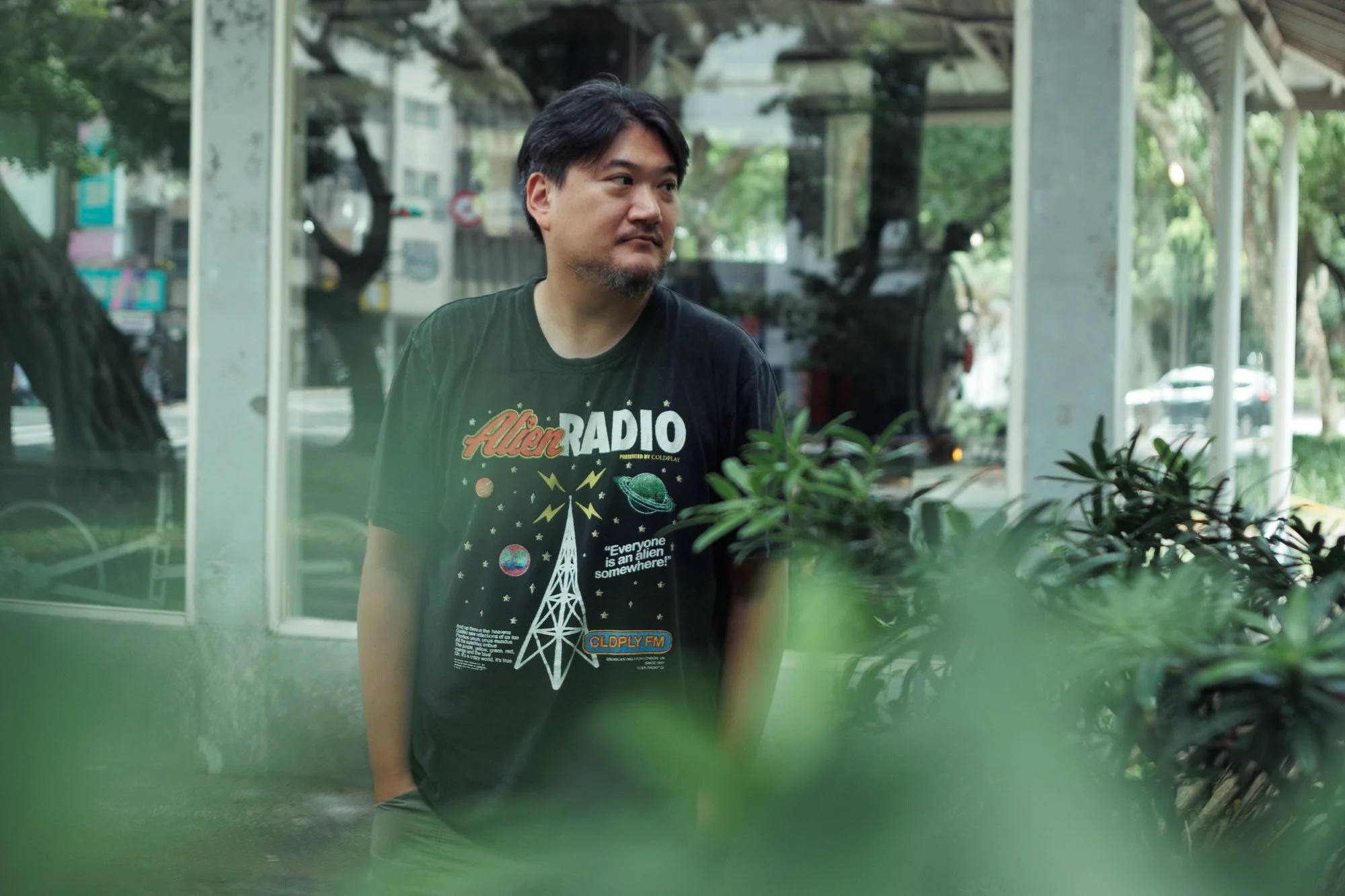
Three Tears in Borneo director Sun Chieh-Heng, who holds degrees in history and international politics, reflected, “War is the extreme crystallization of different national positions.” (Photo by Cheng Yu-Chen)
Sun Chieh-Heng was still relatively new to the film and television industry, and his past productions had all been made on budgets of less than NT$100,000. It wasn’t until he completed the 2019 social realist drama Home Sick, based on a bloody incident involving migrant fishermen at sea, that he finally had the chance to work on a well-resourced and professionally structured narrative project. This experience marked a promising beginning for Sun, and naturally, he became eager to take on his next work. But the question remained: what story should he tell next?
Screenwriter Tsai Yu-Fen recalled the “cool idea” they had come up with back at Zhongshan Hall: that “cool story” full of history, conspiracy, conflict, and sweeping wartime settings.
Therefore, she began digging into World War II materials and, through the nonfiction book The Day the War Ended, learned about the existence of Taiwanese POW camp guards. Following that lead, she went on to read Marching to Borneo: Taiwanese POW Camp Guards, a work by historian and writer Lee Chan-Ping, which focuses on life inside the POW camps.
“As I kept reading, a vivid image came to mind: during the war, Taiwanese people faced Japanese officers; then, after the war, in the very same place, everything spun around, and they found themselves facing a group of Australian prosecutors instead,” said Tsai. She attempted to adapt the interaction between Ko Ching-Hsing and the wife of the Republic of China’s consul in North Borneo into a short film script: the protagonist trades cigarettes for eggs to secretly help a mother raising her babies. The story ends with a courtroom trial. However, in this version, the protagonist’s fate is the opposite of Ko Ching-Hsing’s. Instead of a commuted sentence, the verdict remains unchanged: death. The character ultimately dies in a foreign land. “In simple terms, it’s a story where a good deed goes unrewarded,” Tsai concluded.
Later, they expanded and adapted this story, which is centered on a Taiwanese POW camp guard, the wife of a Republic of China consul, and a war crimes trial, into the miniseries Three Tears in Borneo.
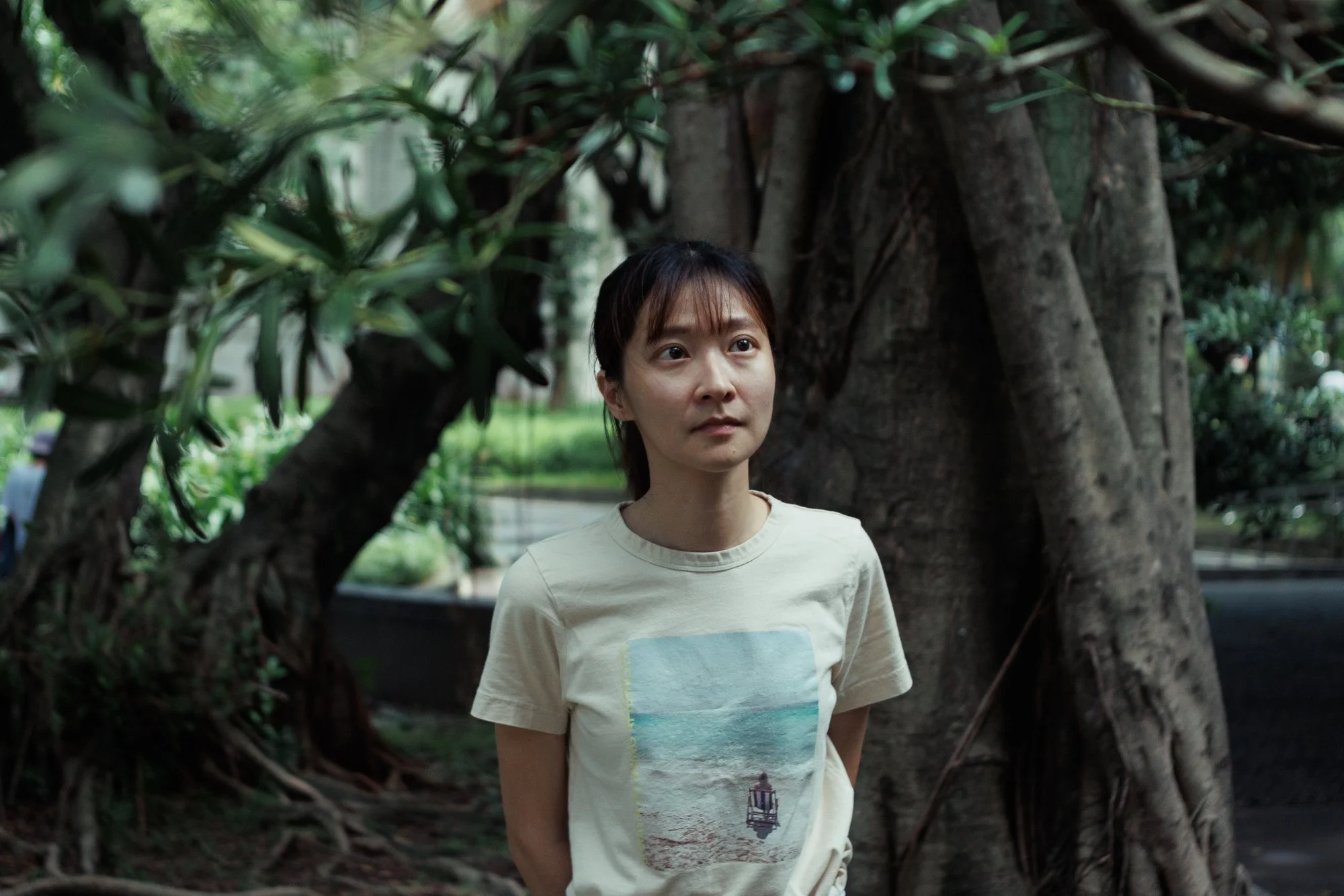
Based on Ko Ching-Hsing, screenwriter Tsai Yu-Fen created A-Yuan, the protagonist of Three Tears in Borneo: “The entire story probes whether he should be a good soldier, or a good human being.” (Photo by Cheng Yu-Chen)
Three Tears in Borneo not only draws from Ko Ching-Hsing’s story but also weaves in historical material from the POW camps in North Borneo. The main Taiwanese guard character, originally based on Ko Ching-Hsing and named “A-Yuan” (Shinkai Zhiyuan), was later expanded into three characters: Ronghui (Shinkai Hui), Dezai (Shinkai Mude), and Zhiyuan. This ensemble both enriched the narrative and enabled a more nuanced depiction of the diverse historical experiences, such as the varied roles of Taiwanese guards within the camps, the different outcomes of their trials, and the complex motivations and ideologies behind their participation in the war as “Taiwanese Japanese.”
“To be honest, not all Taiwanese people there (in the Borneo POW camp) were like Ko Ching-Hsing, who helped the prisoners. Most of the time, they were simply carrying out their duties or treating the prisoners violently, whether actively or passively.”
Tsai Yu-Fen believes that presenting the story in a series format allows for a longer narrative to showcase the diverse attitudes of Taiwanese soldiers serving in the Japanese military at the time, rather than focusing solely on positive figures like Ko Ching-Hsing. However, during the scriptwriting process, Tsai Yu-Fen had no hesitation in positioning Ah-yuan, who treated the consul’s wife with kindness, as “my protagonist.”
“During the war, A-yuan constantly struggled between his humanity and his identity. He could sympathize with the consul’s wife’s plight, but he also had to follow orders. The entire story explores whether he should be a military man or a good person.”
Tsai Yu-Fen lamented that every time Ah-yuan wanted to do good, other Taiwanese soldiers in the Japanese military would “dissuade” him, or he would encounter other obstacles of fate.
Sun Chieh-Heng reflected: “Ah-Yuan is the one who most closely resembles the older generation of Taiwanese who lived through that era.” He explained that the choices people like Ah-Yuan made were often not based on firm beliefs or values, but were split-second decisions made under extreme circumstances. These decisions might lead to regret, with consequences both good and bad. But even if they had chosen differently the next time, they might still end up regretting it. “I think A-Yuan’s character feels more relatable to audiences and to ourselves.”
Neither Here nor There: Taiwanese Defendants in the Allied Trials as Class-C War Criminals.
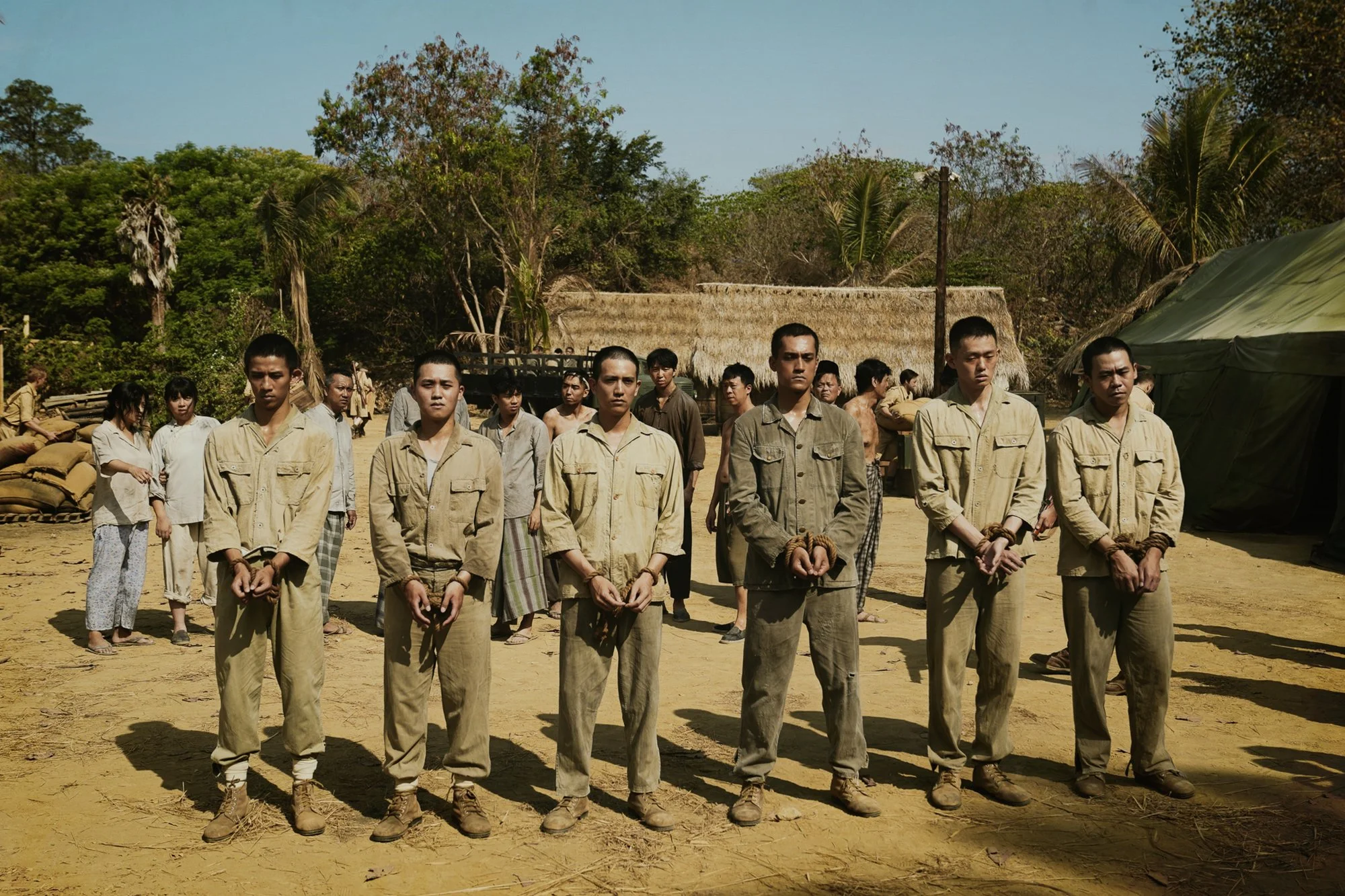
After World War II ended, the soldiers and military dependents in the North Borneo POW camp saw their roles reversed and became Allied prisoners of war. Pictured is a still from Three Tears in Borneo. (Image courtesy of Public Television)
Three Tears in Borneo stands apart from other films, dramas, and literary works that explore Taiwanese soldiers in the Japanese military and Taiwan’s relationship to the Pacific War. What makes it unique is its clear portrayal of the difficult position Taiwanese POW camp guards were situated in: They were caught between a colonial master (Japan) and an enemy (the Allies), and between the roles of aggressor and the colonized. The series also offers a deeply human depiction of Taiwanese soldiers’ struggles with national identity and the moral ambiguities of war. Moreover, it vividly presents the postwar trials of Japanese war criminals, a subject rarely explored in detail. While landmark events like the Nuremberg Trials and the Tokyo Trials have become central to historical memory and transitional justice, the trials of lower-ranking war criminals from defeated nations have largely remained invisible to the world, with few opportunities for in-depth discussion.
After World War II, war crimes trials in the Asia-Pacific region were carried out in 53 locations across Asia, based on legal frameworks independently established by seven Allied nations. Because most of the POWs held in Borneo were Australian, British, or Indonesian, the trials there were conducted by the Australian military tribunal.
In total, 5,707 Japanese military personnel were prosecuted by various Allied countries, including 190 Taiwanese who were classified as Class B or C war criminals. Among them, 21 were sentenced to death for committing war crimes and crimes against humanity. Of the Taiwanese tried by the Australian military tribunal, 95 were convicted, and 7 were sentenced to death, which is the highest number among all the Allied nations. This reflects the particularly harsh stance the Australian tribunal took toward Taiwanese war criminals.
Although Ko Ching-Hsing was ultimately spared the death penalty—his sentence reduced to ten years due to the efforts of a diligent Japanese defense lawyer and his superior’s confession—not everyone was so “fortunate.” According to memoirs written by Japanese attorneys at the time, the sheer number of Japanese military personnel being prosecuted as war criminals made it nearly impossible for the defense teams to fully understand the circumstances of the Taiwanese defendants. Some survivors also recalled that Japanese defense lawyers were apathetic, and in some cases, remained completely silent when representing Taiwanese individuals.
This reveals that, although the Japanese had the obligation to defend Taiwanese war criminals, they did not truly regard the Taiwanese as their own “compatriots.”
According to the oral history recorded by Lee Chan-Ping, author of Marching to Borneo: Taiwanese POW Camp Guards, Japanese officers frequently shifted responsibility onto lower-ranking guards. They often claimed they “did not recall ordering subordinates to mistreat prisoners” or argued that “the mistreatment was due to the inherently cruel and savage nature of the Taiwanese.” At the time, there was even a common saying: “Five years for a slap, ten years for a punch.” Some were sentenced to as many as 15 years in prison for slapping POWs, an act they claimed was done under orders to prevent the prisoners from slacking off.
Moreover, throughout their transfer, detention, and trial, many of these defendants were subjected to retaliatory beatings or unfair treatment by the Allied forces. Although the Australian military at the time claimed that “this was a fair and just war tribunal,” even Australian researchers have acknowledged that the trial processes were rushed and crude, and that the atmosphere of vengeance that pervaded the courtroom severely compromised the fairness of the verdicts.
As a result, Three Tears in Borneo deliberately begins its plot with the suspenseful premise that A-Yuan alone bears full responsibility for the massacre of POWs. This setup not only drives the unfolding mystery surrounding the truth but also highlights the many controversies surrounding the Australian military tribunal at the time, including a prosecution focused more on assigning blame than uncovering the truth, defense lawyers who misled or stayed silent to protect Japanese officers, and judges who rushed through trials with careless efficiency.
So, did the Republic of China side with the Taiwanese defendants? Although Chen Yi accepted Japan’s surrender in Taiwan during the trials and the island was placed under the administration of the Republic of China, the ROC government, preoccupied with handling Taiwanese war criminals from the Chinese battlefield, took a passive stance toward those accused in other regions. It was even less likely to speak out against the wrongful or unjust verdicts they faced. Moreover, although the Republic of China unilaterally declared that “all Taiwanese had now become ROC citizens,” the Allied powers, eager to hold war criminals accountable, rejected this claim, since during the war, Taiwanese were legally part of the Japanese Empire.
As a result, Three Tears in Borneo deliberately reconstructs this historical contradiction through its storyline: although the Republic of China’s consul in the drama, testifying as a witness during the trial, has already received a letter from Chiang Kai-Shek clearly stating that Taiwanese are now citizens of the Republic of China, he still firmly opposes the argument that Taiwanese war criminals should be treated as part of the victorious side—because these Taiwanese guards had indeed committed war crimes that could not be easily dismissed. Sun Chieh-Heng couldn’t help but reflect:
“The Taiwanese on trial stood at the center of contending powers yet had no one to rely on. This became a tragedy of their time.”
“I Only Read the File, but I Can’t Be Sure Whether He Killed Anyone”
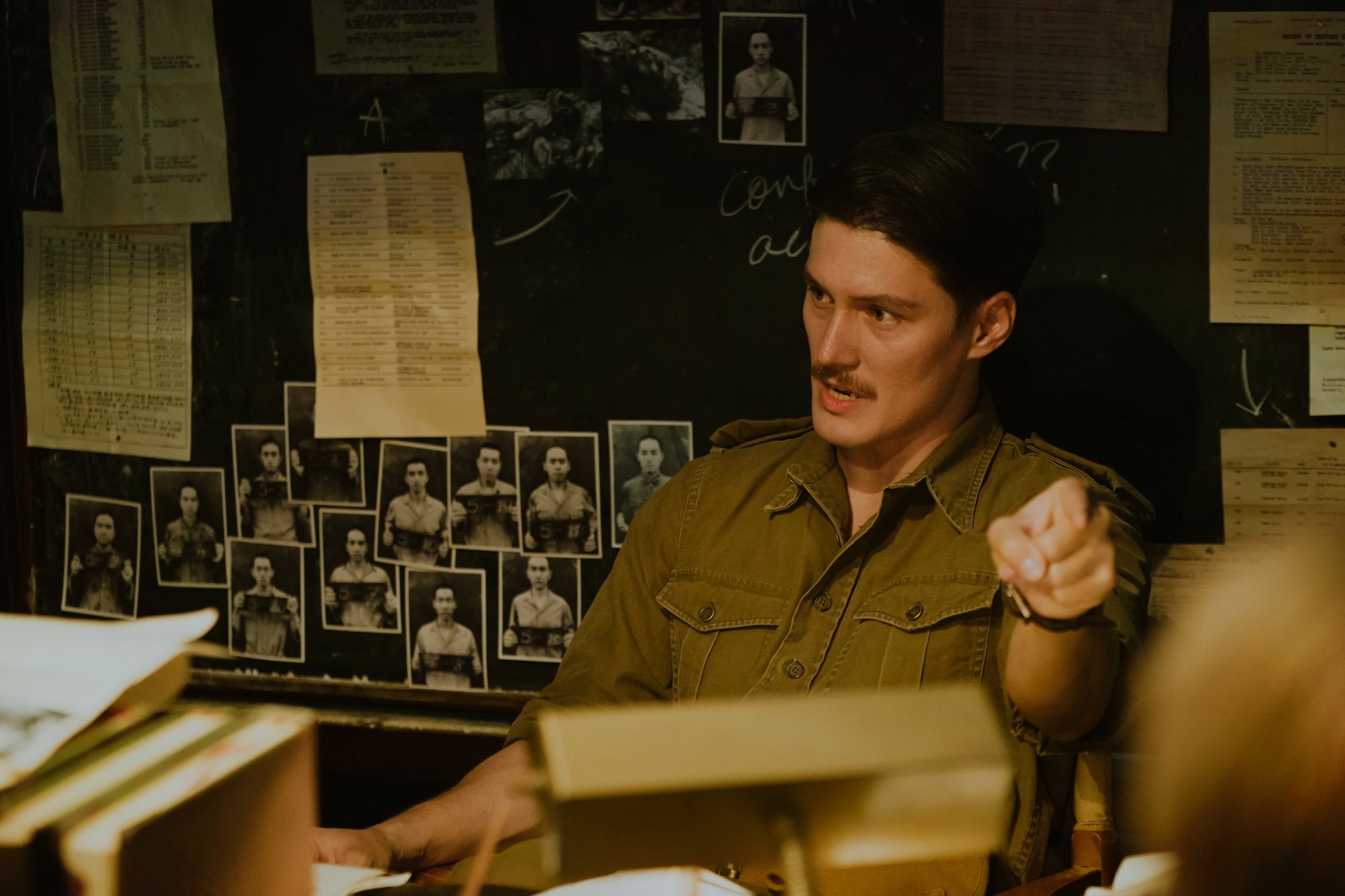
William, the Australian prosecutor in Three Tears in Borneo, is a character deeply shaped by the war and driven to pursue justice. (Image courtesy of Public Television)
To ensure historical accuracy in depicting the trials, the creators of Three Tears in Borneo not only studied scholarly works by experts such as Lan Shi-Chi, Associate Professor of History at National Chengchi University, and Chung Shu-Min, Research Fellow at the Institute of Taiwan History, Academia Sinica, but also examined historical archives preserved by the Australian government. Additionally, they cross-referenced these materials with memoirs of Japanese war crimes defense lawyers, gaining a deeper understanding of the helpless and precarious situation faced by the Taiwanese defendants at the time.
Lan Shi-Chi, who has conducted extensive research on overseas Taiwanese during World War II and postwar trials, was one of the consultants the production team consulted. Lan explained to the creators that, procedurally, the Australian military tribunals were properly conducted, so no flaws could be found in the official records. However, many details that occurred in the courtroom, such as language barriers, were not visible in the archives.
Director Sun Chieh-Heng relayed that some defendants reported the absence of interpreters in court, making it impossible for them to defend themselves. And even when interpreters were provided, there’s no way to know the Japanese proficiency of those interpreters whose native language was English. Nor can we be sure about the level of Japanese spoken by the Taiwanese defendants. With so many layers of language translation, how much of the actual truth could be conveyed from the Taiwanese side? “All the documents were typed in English, but could the Taiwanese even understand them?” he asked. “None of this gets recorded in the archives.”
“You might have said a lot, but all of that testimony was delivered in a very short period, without thorough cross-examination,” Sun Chieh-Heng explained. Scholars reviewing these archives have discovered numerous flaws that could have influenced the trial outcomes; many of the verdicts contain logical inconsistencies or uneven standards. “Of course, in the series, we did our best to portray the trial procedures as relatively fair and objective. We didn’t deliberately exaggerate issues like mistranslation or the judges’ rushed rulings,” he added, explaining from the opposing perspective: at the time, it was difficult for the Australian military tribunal to separate itself from the desire to see the defendants punished. After all, delivering justice for fallen Allied comrades was, in itself, seen as an act of righteousness.
Tsai Yu-Fen raised further questions about the postwar trials by citing another Taiwanese war criminal, Lee Lin-Tsai, as an example. In contrast to Ke Ching-Hsing, Lee, who was registered under the Japanese name Suzuki Saburō was initially sentenced to 12 years in prison, but his sentence was later changed to the death penalty. However, the true cause of his death remains unclear and disputed. Some claim he was shot while trying to escape, possibly out of guilt. Driven by this puzzle, Tsai Yu-Fen tirelessly searched through Australian official archives, but the deeper she dug, the more doubts emerged, leading to even heavier questions about truth, guilt, and justice.
“As descendants of these Taiwanese who served as Japanese soldiers or military affiliates, we often view this history from the standpoint of believing, ‘They were good people.’ But after reading these archives, I often found it hard to keep going,” Tsai Yu-Fen reflected. “I couldn’t help but wonder, did our elders really do such things?”
She found some skeptical issues after reading through the archives. For instance, the court typically started looking for witnesses only after the victims had given their statement. “Also, they almost never accept the testimonies of the Japanese witnesses.” She noted.
For example, Lee Lin-Tsai’s Japanese surname was Suzuki, but Suzuki is a common surname among Japanese soldiers, some of whom had already died. In the archives, Tsai Yu-Fen saw that even though Lee repeatedly insisted that the Suzuki in question was not him, and despite his efforts to find witnesses to testify to his innocence, the Australian military tribunal continually rejected both his and the Japanese witnesses’ statements. They refused to believe anyone but their own witnesses, and eventually shut down the court, denying Lee any further chance to clear his name.
“I only read this file, and I can’t say for sure whether he actually killed anyone. But my feelings were deeply conflicted, like that unsettling sense you get when you read about modern wrongful convictions where the accused can’t prove their innocence,” Tsai said. “All I could do was express those emotions that stuck in my chest through the script.”
After completing the script for Three Tears in Borneo, Tsai Yu-Fen felt down and unmotivated for a long time. At this moment, Sun Chieh-Heng specifically reminded her: had she read the memoir Three Came Home by Agnes Newton Keith, the wife of the British Resident of Agriculture and Forestry in North Borneo, who was imprisoned in the Kuching POW camp?
“On the last page of the book, it mentions a tall Taiwanese man whom the author says all the prisoners remembered. Whenever this Taiwanese man found the chance, he would try to give shoes and candies to the children in the POW camp...” Midway through telling this, Tsai Yu-Fen suddenly teared up, said, “I’m going to cry,” and then tears streamed down her face. Only after calming down a bit did she manage to finish speaking, choking on her words.
“He had no name, and I don’t know why he had no name. But when the war ended, the author entered the Japanese POW camp and gave this Taiwanese man a note. The note listed the good and kind things he had done, to be used during his trial.”
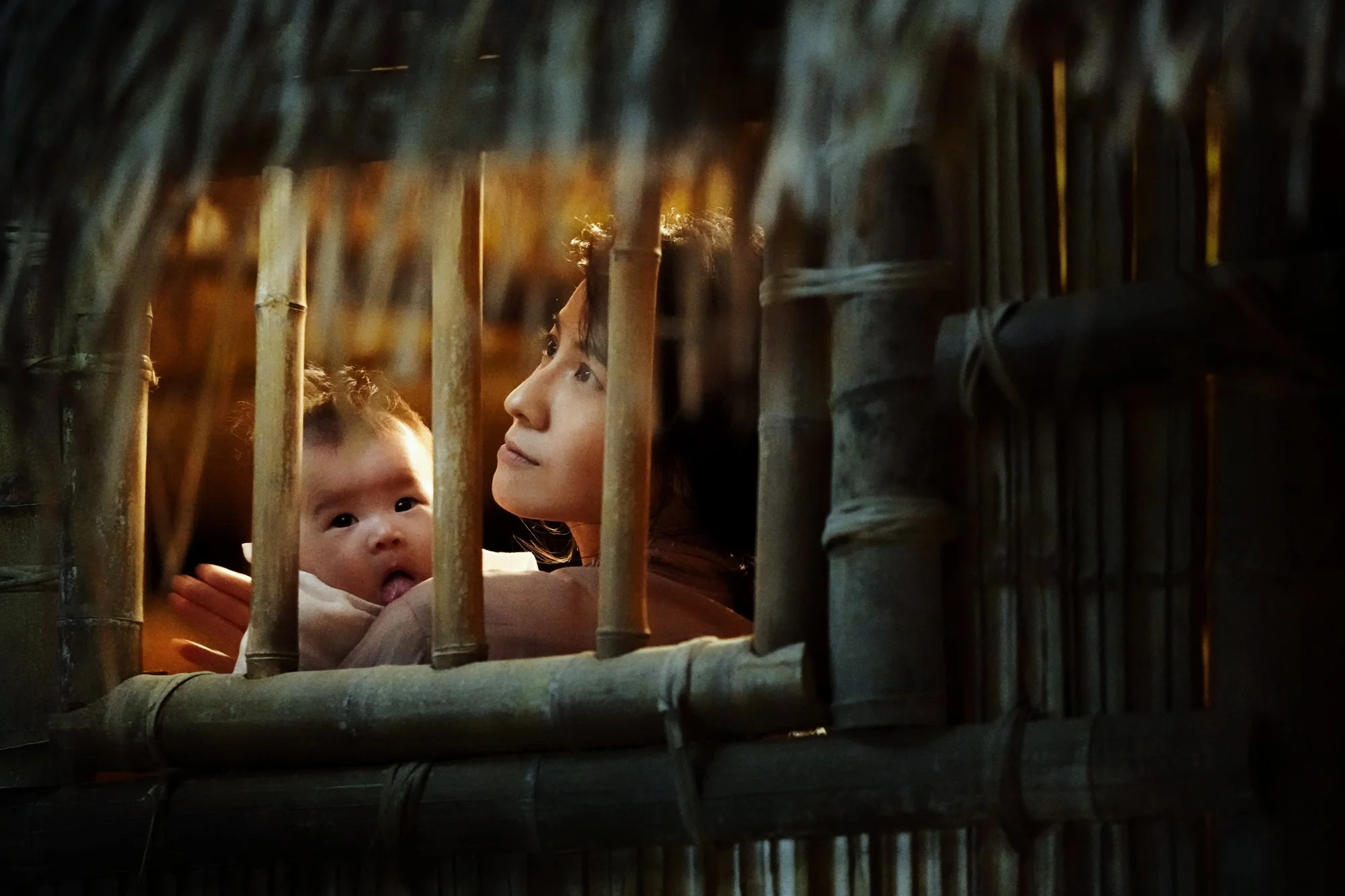
Whether in reality or on screen, the experiences of women and children in POW camps starkly reflect the extremes of human good and evil. Pictured are the wife of a Republic of China consul and her infant in Three Tears in Borneo. (Image courtesy of Public Television)
“In fact, there were many kind-hearted Taiwanese in the POW camps during the war; they just weren’t documented,” Tsai Yu-Fen reflected. She felt that Mrs. Keith’s note gave her a kind of “redemption” and provided a good conclusion to her work on the Three Tears in Borneo screenplay. Although in this script, she did not portray all Taiwanese people as “good”:
“Many Taiwanese at the time were indeed bad and did bad things. When I was writing, I couldn’t deny that fact, otherwise it would be overly idealized. But I hope to show the reasons behind the atrocities.”
Director Sun Chieh-Heng added from the side: “The Taiwanese individuals in the archives were indeed convicted; we can’t just go easy on them in the drama simply because we find them ‘pitiful.’” He emphasized that, regardless of whether there was an element of revenge in the actions of the Australian military, the outcome at the time was based on international law, and those Taiwanese were found “guilty as charged” through legal trials. “But at the very least, drama can help the audience understand what might have happened before this death sentence or that verdict.”
Sun continued that even though today most people accepted or understood that “the vast majority of people aren’t purely good or evil,” drama allowed us to portray the decisions people made back then. While those decisions may be judged by modern audiences as either kind or cruel, right or wrong, Three Tears in Borneo ultimately aims to convey this: “Taiwan’s history is deeply complex, and what our ancestors lived through was even more layered and complicated.”
Through Acting, the Actors Reconnected with and Reconciled Themselves to Their National Histories
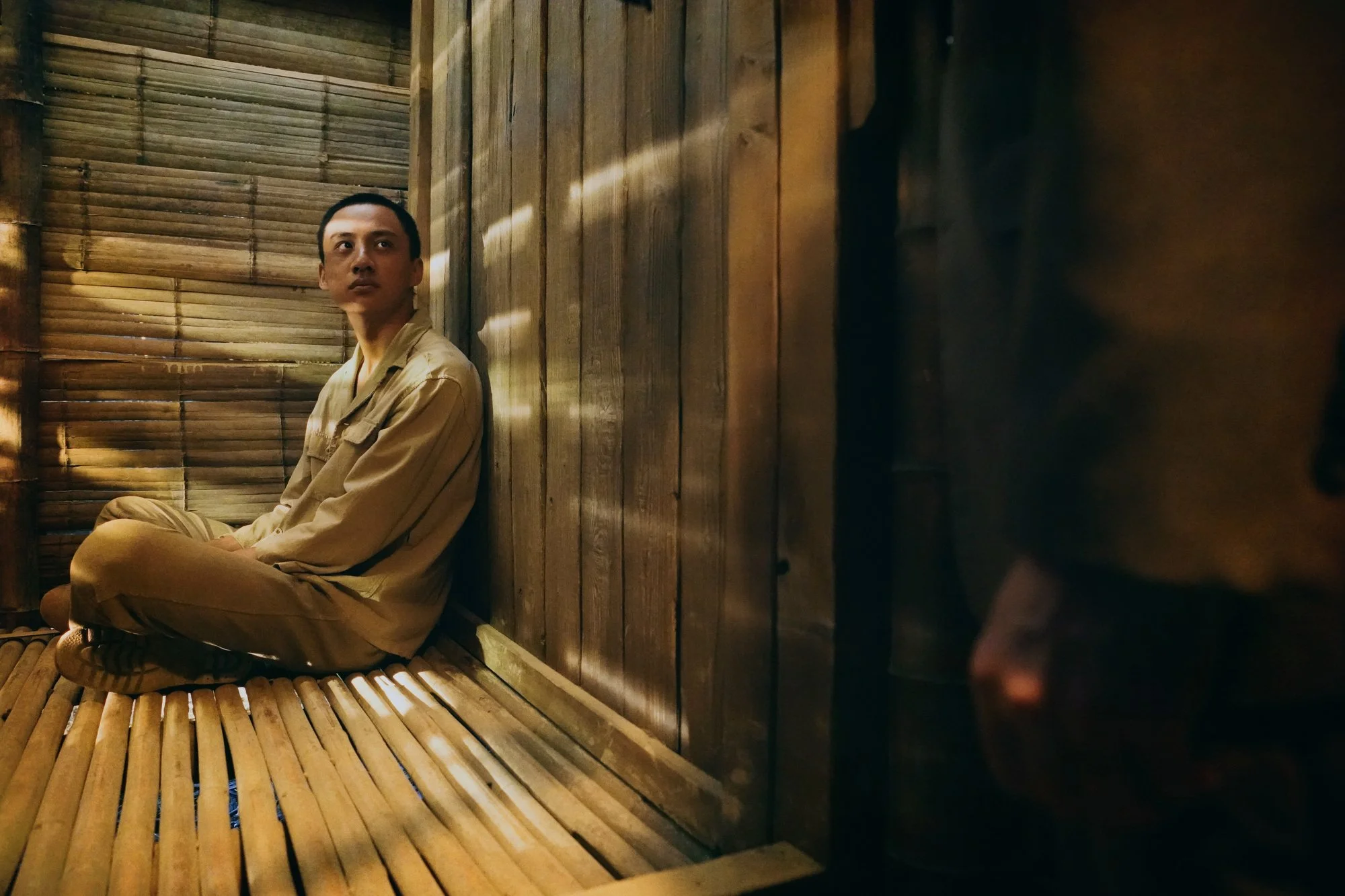
In Three Tears in Borneo, A-Yuan (Shinkai Zhiyuan) is accused of single-handedly committing all the massacre crimes, and the story gradually unravels the mystery. (Image courtesy of Public Television)
The descendants of the Japanese also have complex feelings about this history.
Lin Chia-Ru, the producer of Three Tears in Borneo, shared the story of a Japanese actor who played a villain in the series, a character who was extremely brutal and was eventually sentenced to death. The script included a scene where he walks toward the gallows, with a close-up shot of his final moments before execution. However, during a discussion, some crew members questioned why this cruel character should be given a personal death scene.
“Every person has a beginning and an end to their life,” Lin Chia-Ru said. She believes that everyone is a complete individual with their own ending. Even if the production didn’t film or show it, it doesn’t mean it wasn’t important. “That struck me as incredibly cruel: how people of that era vanished as if swept away by waves. If you put yourself in their place, no one wants to be erased like that.”
Director Sun Chieh-Heng asked the actors to write “characters’ backstories,” so that Japanese actors portraying acts of “unjustified violence” could imagine a plausible personal history. For instance, he might say, “You’re a child who grew up in a fishing village. You went out to sea with your father in harsh conditions, which wore down your patience. You were always worried about coming back empty-handed…” This helped actors understand the emotional and psychological context behind their character’s irritation or aggression toward Taiwanese people and POWs.
“These Japanese actors mainly knew and could share wartime experiences like their cities being bombed or relatives being conscripted into munitions factories,” Sun Chieh-Heng explained. Even if you show them footage or evidence, it can’t fully resolve the internal anxiety they feel about portraying such roles. “It’s similar to how we also struggle to face the fact that some Taiwanese mistreated POWs.”
Sun Chieh-Heng once asked the actor playing a Japanese officer whether taking on such a role caused any harm to his sense of national pride or identity. The actor replied that his character had to rebut the Australians’ accusations that Japan had initiated the war at the military tribunal by declaring, “It was the Western colonizers’ plunder that was the true source of conflict!” He felt that this line had already given the Japanese side a chance to explain themselves. “War is just that helpless,” he said. As for the actor who played the role of walking up the gallows to his execution, he was left trembling and sobbing uncontrollably after the scene. “Even though he did a lot of homework beforehand... no, because he did so much homework, the actor had tied the character to his own life,” Sun reflected. “That’s a good thing for drama, because what the audience sees is something more real, more visceral. But for the actor, it could be an emotional weight that lingers heavily inside for a long time, something that will only slowly fade with time.”
Because of the narrative angle and the fact that she herself is Taiwanese, screenwriter Tsai Yu-Fen admitted that she devoted more attention to the Taiwanese prison guards, trying to flesh out their motivations and backgrounds, which left the Japanese characters comparatively thinner. Still, influenced by the Japanese dramas she had watched growing up, she created a passionate character with his own ideas about justice: Watanabe Naoto, a young assistant attorney on the Japanese defense team. Watanabe is the one who loudly objects when the senior Japanese attorney shows indifference. He is also the first to question the claim that “A-Yuan alone killed all the POWs,” and insists on convincing A-Yuan to file an appeal.
“I don’t understand. During war, people settle things with fists and weapons. Now that the war is over, we’re supposed to resolve disputes with law and justice in court. But no one wants to find the truth, and they only want to save the ones who might get off.” This young lawyer asks, “Can hatred really end this way? Can war truly be over?”
Through this young attorney’s questions, Tsai Yu-Fen was finally able to express her own longing for fairness in the trials and clarity in historical truth. She noted that after Taiwan’s democratization, a group of former Taiwanese soldiers who had served in the Japanese military sought compensation from the Japanese government. But because their nationality had changed after the war, and the Kuomintang government refused to demand reparations from Japan, their request was never fulfilled.
“Back then, the Japanese didn’t care for them. Everyone knows Japan has never sincerely confronted its own wrongdoing during the war," Tsai Yu-Fen said. She believes that if someone like Watanabe Naoto had been present at the trials and demanded that the truth be presented to people, much like how Germany confronted the crimes of the Nazis, “that would count as a form of transitional justice.”
Seventy-Nine Years Ago, Our Ancestors Fought on the Battlefield,
Today, We Confront the Past Through Performance.
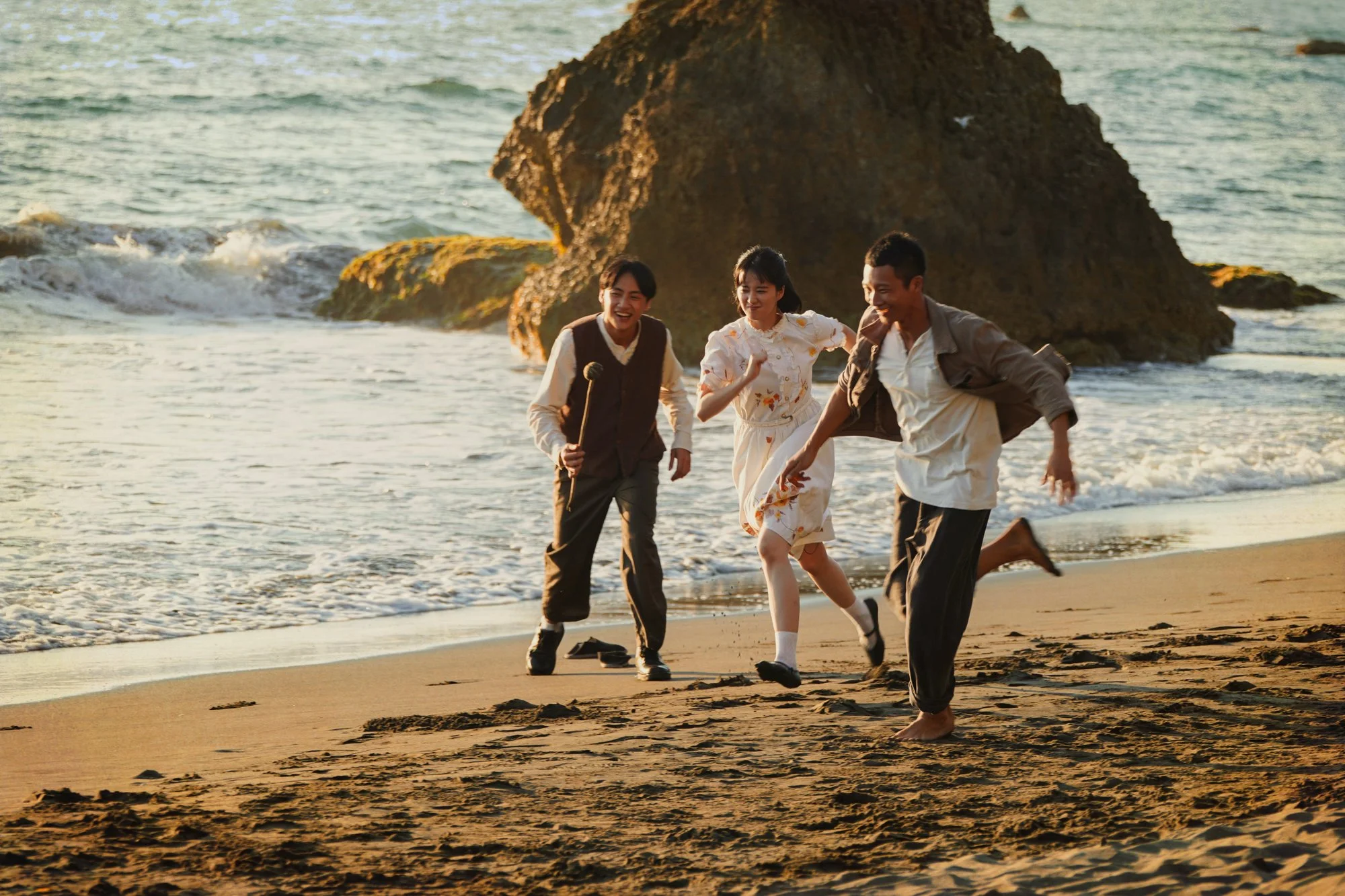
A-Yuan, the protagonist of Three Tears in Borneo, his Japanese lover Sakurako, and his older brother Rong-Hui by the seaside in their hometown of Kaohsiung. A-Yuan does not want to join the military and kill, but volunteers to become a POW guard in order to win Sakurako’s father’s approval. (Image courtesy of Public Television)
“War is the ultimate intensification of different national positions,” said Sun Chieh-Heng, who holds degrees in history and international politics. He reflected that World War II was violently ended by the United States dropping two atomic bombs, but the wartime emotions did not end there. The postwar world remained trapped in polarized opposition that “we hate you”, yet unable to confront the original causes of conflict. “The trials at that time were merely an extension of the war. Without a fair and genuine confrontation with the truth, hatred can never truly end.”
Clarifying historical truth and recalibrating the paths through which we understand history has always been the task of the postwar generations. In the film world this year (2024), Malaysian-born director Lau Kek-Huat used his documentary From Island to Island to portray the wartime role of Taiwanese (soldiers) in Southeast Asia during WWII, questioning the silence of Taiwanese society and reflecting whether Taiwanese’s role at the time were victims or perpetrators. Later, Three Tears in Borneo further explored the experiences of Taiwanese POW camp guards.
“After watching From Island to Island, you might think the Taiwanese weren’t so innocent during the war. But after watching Three Tears in Borneo, the audience might feel something more complex and start to wonder how exactly we should confront this past.” said Sun Chieh-Heng. He added, “Even I don’t have an answer.”
The team composition behind Three Tears in Borneo is equally complex compared to these enquiries. In addition to Japanese actors, the Taiwanese production crew comes from a wide range of backgrounds. Director Sun Chieh-Heng grew up in a military dependents’ village in Taipei and is a third-generation Mainlander; his grandfather served in the Republic of China Air Force and fought against the Japanese military during the “War of Resistance.” Meanwhile, scriptwriter Tsai Yu-Fen and producer Lin Chia-Ju, who joined this interview, have parents who grew up in southern Taiwan’s Chiayi-Tainan region. Their grandparents lived through the Japanese colonial era and still speak Japanese to this day.
“We’re all sitting here together for this interview, but our grandparents may have fought each other on the battlefield. They were enemies,” said Sun. He believes that Taiwan’s complicated past is something contemporary generations must confront and patiently work through. Rather than rushing to “resolve” this legacy or offering a singular, unified answer, what matters more is to ask how Taiwanese people should face the reckonings from our time and reconcile with the history.
Although the first two episodes of the series have already premiered at the Taipei Film Festival and received positive reviews, many people who have not yet seen the drama have nonetheless left comments based on differing political views and stances.
Sun Chieh-Heng noted that the characters and historical events depicted in Three Tears in Borneo may not provide clear answers to Taiwan’s present-day struggles or regrets. But at the very least, through storytelling, we can still pose questions to history. Even though the war has long passed, we still have a responsibility to remember the things those “tidal waves of history” asked us not to forget.
Link to the original article: https://www.twreporter.org/a/three-tears-in-borneo


