The Taiwan Gazette translates and publishes original reporting from Taiwan, Hong Kong and China. Our goal with the platform is simple: We want original reporting from the Sinosphere to have a wider impact on global civil society.

LATEST ARTICLES
ALL
SPECIAL ISSUE:
Reading Taiwan Today: Translations from Taiwanese Media
ALL


FEATURED STORIES:
228 AND THE WHITE TERROR
ALL

How have Taiwan’s civil society responded to the limits of state-organized transitional justice initiatives?

Between 1949 and 1999, the National Defense Medical Center was located around what is now the Shuiyuan Campus of National Taiwan University. Ghastly rumors about the site circulated among present-day college students. Why was the site haunted and by whom? What might be the ghosts’ unfulfilled wishes? How have fictions and oral narratives about the White Terror in Taiwan contributed to a haunted remembering of the site? And how should we reckon with the ghastly heritage of NTU’s Shuiyuan Campus and beyond?

Chen Wen-hsi was the first casualty of the 228 Massacre. He was also an unemployed loafer and the brother of a notorious crime boss. Was he a victim or a villain?

In 2016, Taiwan's supreme court ruled that a 228 victim family from Okinawa had the right to receive government compensation. Taiwan watcher Tsuyoshi Nojima asks what Japan can learn from the ruling.

In 2013, Tsai Ing-wen wrote a letter to the youth of China about the 228 Massacre, and expressed her hope for a future democratic China.

Former grand justice Hsu Yu-hsiu writes about the lockstep political development of Taiwan’s independent press and the tangwai movement, and how the public found courage to speak their conscience.

Writer Tang Shu-wen says the ghosts of the martial law period lived on in Taiwanese schools for nearly fifteen years.

Writer Chen Rou-jin talks about her identity crisis as a high school student during the martial law period, and how it affects her to the present day.

A child of the martial law period says its influence persisted even after it ended and that she was “blacklisted” by her classmates for not crying at the former president’s funeral.
LUSHENG IN TAIWAN:
CONTRADICTIONS AND ANTICIPATIONS
ALL

The Taiwan Gazette screened the documentary film Our Youth in Taiwan from March 8 to 14, 2021. We sat down with University of Toronto Professor Michelle Cho to discuss Taiwan-China geopolitical relations and the usage of “worlding” within the context of the film.

The Taiwan Gazette interviews Taiwan-based cultural studies scholar Chien-ting Lin to discuss how Taiwan’s treatment of Mainland Chinese students (lusheng) during COVID-19 can be understood in terms of war and love. Divided into two parts, this interview is the fourth piece of our special series: Lusheng in Taiwan: Contradictions and Anticipations.

The Taiwan Gazette interviews Taiwan-based cultural studies scholar Chien-ting Lin to discuss how Taiwan’s treatment of Mainland Chinese students (lusheng) during COVID-19 can be understood in terms of war and love. Divided into two parts, this interview is the fourth piece of our special series: Lusheng in Taiwan: Contradictions and Anticipations.

Pei is a Mainland Chinese student who has studied in both Taiwan and Hong Kong. How is she “represented” in debates in different places? What are her insights on identity politics, nationalism, and populism? Introducing the third piece of our special series: Lusheng in Taiwan: Contradictions and Anticipations.

2021 marks the tenth anniversary of Mainland Chinese students (lusheng) pursuing degrees at Taiwan's higher education institutions. However, in fall 2021 China’s Ministry of Education will suspend their enrolment. How might we address the changing political economy that shapes and contests policies for lusheng? What will become of these students? Introducing the second piece of our special series: Lusheng in Taiwan: Contradictions and Anticipations.

When Covid-19 broke out in China in January 2020, Chinese students studying in Taiwan (lusheng) found themselves caught between geopolitical tensions. The pandemic is not only a health issue for these young people, but a political issue as well. Introducing the first piece of the special series: Lusheng in Taiwan: Contradictions and Anticipations.
INTERVIEWS
ALL
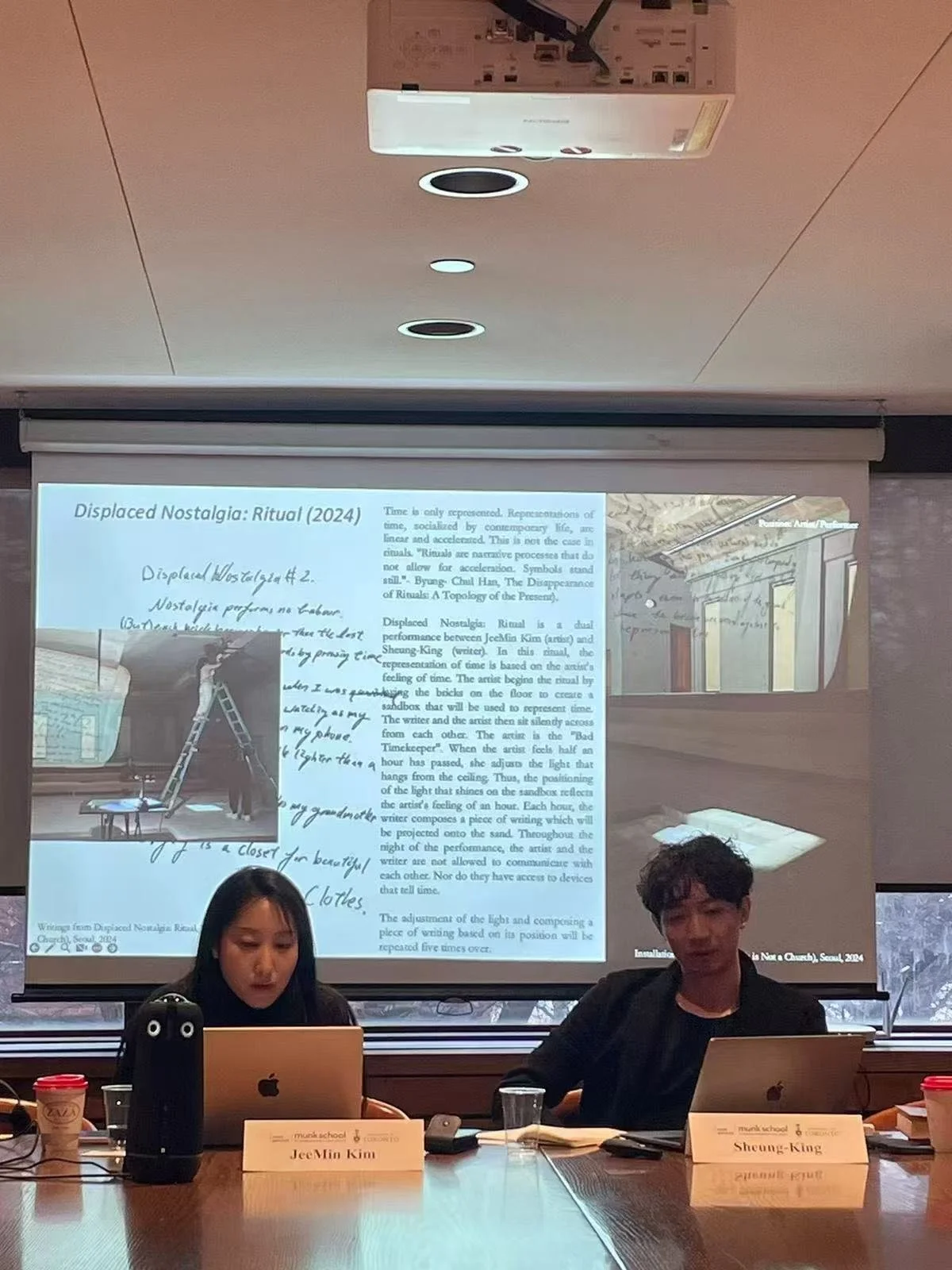
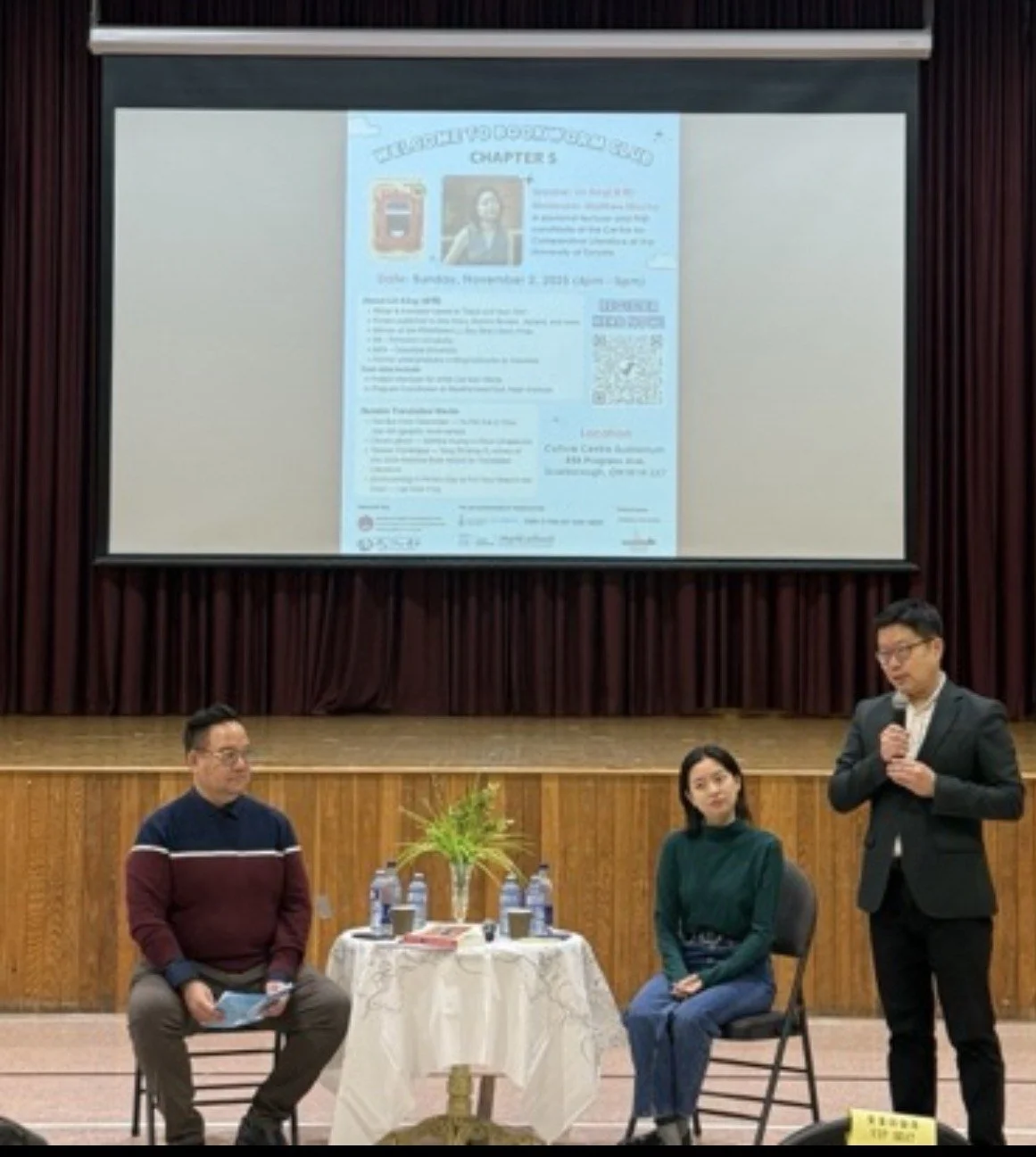


In October 2022, a graduate student workshop was conducted with Professor Jung. In the workshop, Professor Jung shared his experiences of conducting field research in multiple Asian countries, as well as his journey as an international student and Asian scholar in North America and his involvement with queer activism and scholarship.

In October 2022, a graduate student workshop was conducted with Professor Jung. In the workshop, Professor Jung shared his experiences of conducting field research in multiple Asian countries, as well as his journey as an international student and Asian scholar in North America and his involvement with queer activism and scholarship.

In October 2022, a graduate student workshop was conducted with Professor Jung. In the workshop, Professor Jung shared his experiences of conducting field research in multiple Asian countries, as well as his journey as an international student and Asian scholar in North America and his involvement with queer activism and scholarship.
BIG IDEAS COMPETITION:
EXPLORING GLOBAL TAIWAN
Featured

In our second feature for the 2020 Big Ideas Competition: Exploring Global Taiwan series, award recipient Pranav Dayanand makes a case for what TikTok can tell us about the complex state of Indonesian migrant worker affairs in Taiwan.

Stephanie Tai, author of Tempting Formosa and 2020 Big Ideas Competition: Exploring Global Taiwan award recipient, talks to our Deputy Editor Elizabeth Shaw about her process of creating a Taiwanese dessert cookbook and using it to pay homage to her homeland of Taiwan.

In Taiwan, after election night, candidates have one final task: an elaborate thank-you tour, performed in person. For some this can take weeks. But what’s this all for?

With an increase of extreme weather due to climate change, the need for food security in Taiwan is more pressing than ever. Could new technologies help defend Taiwanese agriculture?

Two University of Toronto students surveyed almost 500 members of the Taiwanese public about organ donation. Many had no idea how to do it.

The “Asia Silicon Valley” plan was supposed to fix Taiwan’s brain drain problem, but critics say it’s not working.

For Big Ideas 2017, the Taiwan Gazette covers five research projects, authored by seven young scholars coming from a wide range of disciplines.