The Taiwan Gazette translates and publishes original reporting from Taiwan, Hong Kong and China. Our goal with the platform is simple: We want original reporting from the Sinosphere to have a wider impact on global civil society.

ALL


Simon Lee, a street sleeper and practitioner of what is now known as the “lying flat” movement, passed away in December 2021. Hong Kong photographer Ko Chung Ming had the chance to document the bits and pieces of Simon’s life and his way of engaging with the social world.

July 1, 2019 is the 2nd anniversary of the occupation of the Legislative Council in Hong Kong’s Anti-Extradition Bill movement and the 1st anniversary of Taiwan’s investment of national resources in providing humanitarian aid to Hongkongers in exile. Two years after Taiwan’s assistance of Hong Kong, official relations between the two have seemingly ceased as the political situation in Hong Kong continues to deteriorate. Amid geopolitical uncertainties, how can Taiwan continue to help Hongkongers?

In February 2020, the first physical diasporic Hongkonger magazine —Flow HK (如水), or “Be Water” in Chinese—was printed in Taiwan. In terms of its significance to the pro-democracy movement, this magazine is a living embodiment of an imagined Hong Kong community under the shadow of the Hong Kong National Security Law. The Reporter interviewed the editorial board of Flow HK to find out why they decided to publish in Taiwan and how they intended to keep the current of the Hong Kong protests flowing across borders.

On July 1, 2020, the UK announced the expansion of rights for BNO passport holders, arguing that the Hong Kong National Security Law is a “clear and serious” violation of the Sino-British Joint Declaration. For Hongkongers born before 1997, the BNO now offers a new "escape" route. What can the BNO inform us about the formation of Hongkonger identities and the geohistorical entanglements between Hong Kong, the UK, and China?

On June 12, 2019, Hong Kong protestors gathered outside the Legislative Council, attempting to postpone the extradition bill’s second reading. The proposed bill was criticized for opening a potential legal channel for China to intimidate or arrest those critical of its rule. Protestors were stormed by rubber bullets and more than 100 rounds of tear gas. Such police brutality shocked the Hong Kong society at the early stage of the anti-ELAB protests.

Many in Hong Kong see immigration as a means to escape China’s tightened control over the city they called home. The Reporter interviews immigrants who moved from Hong Kong to Taiwan between 1969 to 2020 for different reasons. What were their strategies of adaptation and integration? How did they deal with their feelings toward immigration—a feeling of being so close yet so far?

At the start of 2021, the Hong Kong police arrested more than 50 opposition figures under the Hong Kong National Security Law. This was a huge crackdown on activists and those seeking to defend democracy in Hong Kong.

Hong Kong’s anti-extradition protests have slowed considerably since the outbreak of the coronavirus. But underneath the medical masks, confidence in chief executive Carrie Lam remains in short supply.
ALL
Special issue:
ENCOUNTERING EVERYDAY LIFE:
TAIWAN IN mUSEUMS
ALL
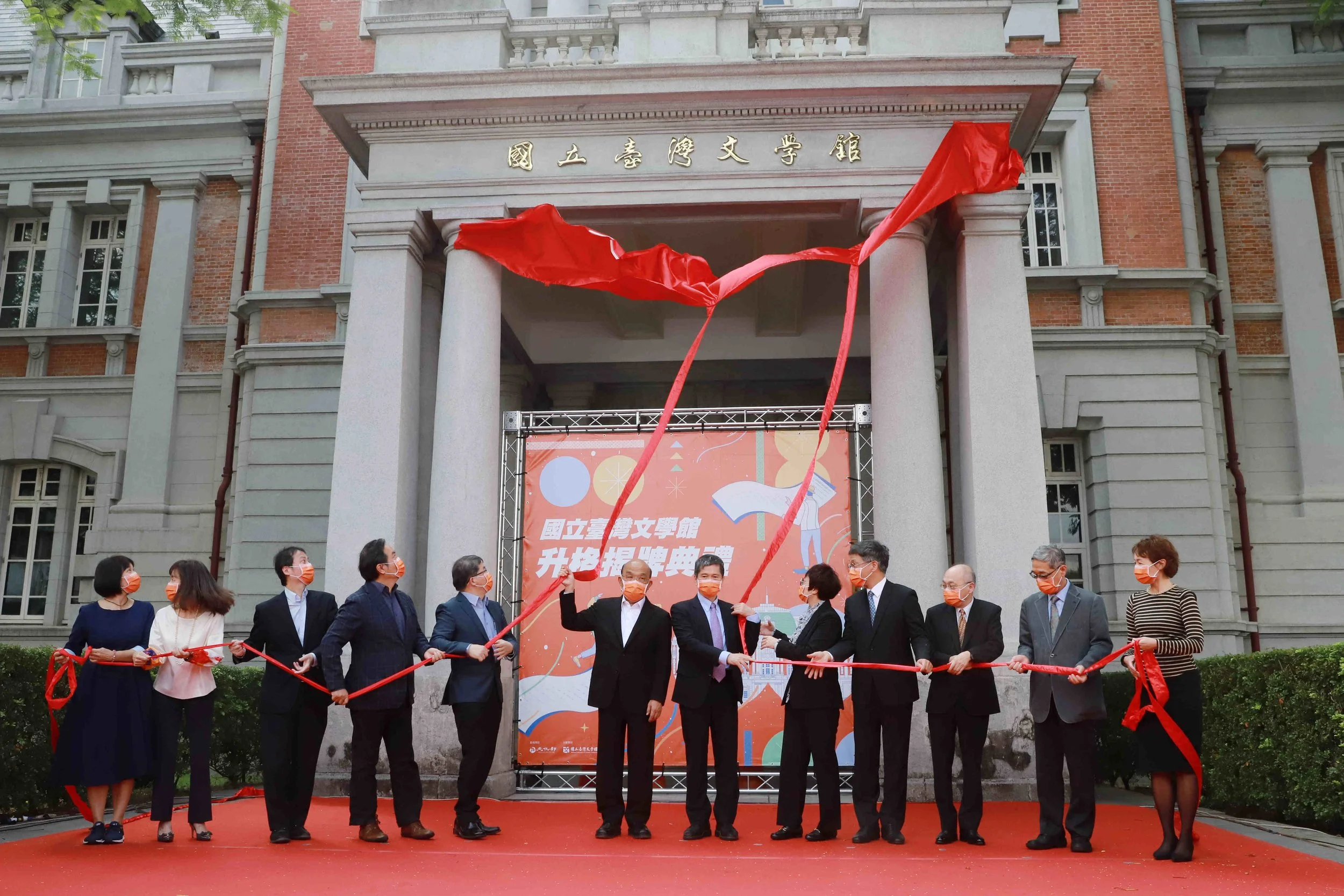
“Taiwan literature can be conceived of as every single mode of literary expression that has left an existential trace on Taiwan,” said Dr. Shuo-bin Su (蘇碩斌), director of the National Museum of Taiwan Literature. The research, preservation, and promotion of such modes of expression, however, either failed to receive organized institutional support or was subsumed under a China-centered historiographical perspective before the lifting of martial law in Taiwan. The establishment of Taiwan literature as a field of academic inquiry became possible thanks to the political liberalization of Taiwanese society and the emergence of a “Taiwan consciousness” since the 1980s. What might be the challenges and possibilities facing the field of Taiwan literature, then and now? What might be the new directions of the field? This interview features as part of our special issue: Encountering Everyday Life: Taiwan in Museums.

Before the lifting of martial law in 1987, the research, preservation, and promotion of Taiwan literature in Taiwan either failed to receive organized institutional support or was subsumed under a China-centered historiographical perspective. The establishment of Taiwan literature as a field of academic inquiry became possible thanks to the political liberalization of Taiwanese society and the emergence of a “Taiwan consciousness” since the 1980s. What might be the challenges and possibilities facing the field of Taiwan literature, then and now? What might be the new directions of the field? This interview features as part of our special issue: Encountering Everyday Life: Taiwan in Museums.
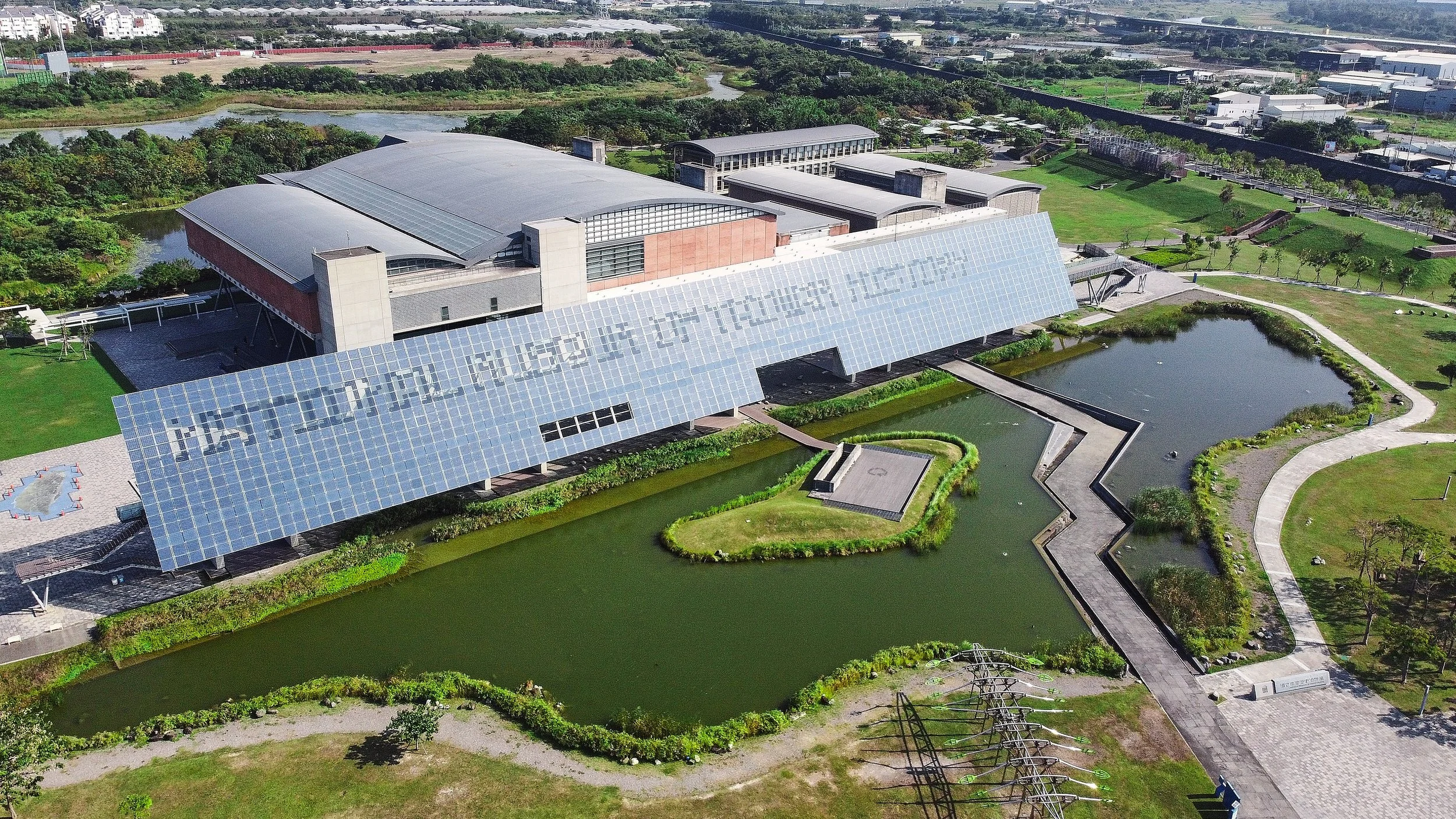
The field of Taiwan history has gained increasing visibility in academia, both in Taiwan and abroad. Yet the production and dissemination of Taiwan-related knowledge in Taiwan before the lifting of martial law in 1987 faced great difficulty. How did the founding of the National Museum of Taiwan History (NMTH) changed the way we approach Taiwan history? This interview features as part of our special issue: Encountering Everyday Life: Taiwan in Museums.

The field of Taiwan history has gained increasing visibility in academia, both in Taiwan and abroad. Yet the production and dissemination of Taiwan-related knowledge in Taiwan before the lifting of martial law in 1987 faced great difficulty. How did the institutionalization of Taiwan history as an academic field in and of itself changed the way we approach Taiwan history? This interview features as part of our special issue: Encountering Everyday Life: Taiwan in Museums.

Wheaten foods play an important role in the everyday life of Taiwanese people. However, the mass introduction of wheaten foods to Taiwan and even Taiwan’s own domestic production of flour are fairly recent phenomena. Why did Taiwanese begin integrating large quantities of wheaten foods into their diet? The answer to this question is intimately linked to U.S. aid. A story of food culture and U.S. Cold War cultural policy in Asia, this article features as part of our special issue: Encountering Everyday Life: Taiwan in Museums.

The practice of physical training is not only an issue of individual choice but has always been intertwined with the political economy of nation-building. A story of civilization, wartime mobilization, and nationalism, this article on physical training features as part of our special issue: Encountering Everyday Life: Taiwan in Museums.

In the early stage of Japanese colonial governance, the Government-General of Taiwan encouraged the straw hat business—the growth of which not only brought Taiwan to the stage of international fashion, but also consolidated Japan’s colonial imaginary of Taiwan as a southern island, a strategic site from which the southward advance policy could be launched. A story about colonial modernity and imaginaries, this article features as part of our special issue: Encountering Everyday Life: Taiwan in Museums.

Taiwan’s sugar industry flourished during the Japanese colonial era, giving birth to the widely known chocolate brand: The Meiji Chocolate. A story about Japanese colonial modernity and anti-colonial resistance in Taiwan, this article on sugar features as part of our new special issue: Encountering Everyday Life: Taiwan in Museums.

228 AND THE WHITE TERROR
ALL

How have Taiwan’s civil society responded to the limits of state-organized transitional justice initiatives?

Between 1949 and 1999, the National Defense Medical Center was located around what is now the Shuiyuan Campus of National Taiwan University. Ghastly rumors about the site circulated among present-day college students. Why was the site haunted and by whom? What might be the ghosts’ unfulfilled wishes? How have fictions and oral narratives about the White Terror in Taiwan contributed to a haunted remembering of the site? And how should we reckon with the ghastly heritage of NTU’s Shuiyuan Campus and beyond?

Chen Wen-hsi was the first casualty of the 228 Massacre. He was also an unemployed loafer and the brother of a notorious crime boss. Was he a victim or a villain?

In 2016, Taiwan's supreme court ruled that a 228 victim family from Okinawa had the right to receive government compensation. Taiwan watcher Tsuyoshi Nojima asks what Japan can learn from the ruling.

In 2013, Tsai Ing-wen wrote a letter to the youth of China about the 228 Massacre, and expressed her hope for a future democratic China.

Former grand justice Hsu Yu-hsiu writes about the lockstep political development of Taiwan’s independent press and the tangwai movement, and how the public found courage to speak their conscience.

Writer Tang Shu-wen says the ghosts of the martial law period lived on in Taiwanese schools for nearly fifteen years.

Writer Chen Rou-jin talks about her identity crisis as a high school student during the martial law period, and how it affects her to the present day.

A child of the martial law period says its influence persisted even after it ended and that she was “blacklisted” by her classmates for not crying at the former president’s funeral.

Writer Chen Tsui-lien says the KMT’s party-state education system was an efficient brainwashing apparatus. But when the cracks started to appear, the entire system came crashing down.

The Tsou people of Alishan talk about their families’ suffering during the 228 Massacre and White Terror period.

The families of 228 Massacre victims in Chiayi recount the losing battle of the local militias and the senseless violence that came afterwards.

Victims’ families in Keelung and Badu recount the horrors they witnessed during the 228 massacre.

Seven decades after the 228 Massacre, survivors and relatives in Taipei City and Taipei County recount their experience and anguish.

A year and a half before the 228 Massacre, the Chinese Nationalists were busy robbing Taiwan in broad daylight.

The graves of White Terror victims at Liuzhangli were forgotten for decades. Now, preserving the site has become surprisingly controversial.
LUSHENG IN TAIWAN:
CONTRADICTIONS AND ANTICIPATIONS
ALL

The Taiwan Gazette screened the documentary film Our Youth in Taiwan from March 8 to 14, 2021. We sat down with University of Toronto Professor Michelle Cho to discuss Taiwan-China geopolitical relations and the usage of “worlding” within the context of the film.

The Taiwan Gazette interviews Taiwan-based cultural studies scholar Chien-ting Lin to discuss how Taiwan’s treatment of Mainland Chinese students (lusheng) during COVID-19 can be understood in terms of war and love. Divided into two parts, this interview is the fourth piece of our special series: Lusheng in Taiwan: Contradictions and Anticipations.

The Taiwan Gazette interviews Taiwan-based cultural studies scholar Chien-ting Lin to discuss how Taiwan’s treatment of Mainland Chinese students (lusheng) during COVID-19 can be understood in terms of war and love. Divided into two parts, this interview is the fourth piece of our special series: Lusheng in Taiwan: Contradictions and Anticipations.

Pei is a Mainland Chinese student who has studied in both Taiwan and Hong Kong. How is she “represented” in debates in different places? What are her insights on identity politics, nationalism, and populism? Introducing the third piece of our special series: Lusheng in Taiwan: Contradictions and Anticipations.

2021 marks the tenth anniversary of Mainland Chinese students (lusheng) pursuing degrees at Taiwan's higher education institutions. However, in fall 2021 China’s Ministry of Education will suspend their enrolment. How might we address the changing political economy that shapes and contests policies for lusheng? What will become of these students? Introducing the second piece of our special series: Lusheng in Taiwan: Contradictions and Anticipations.

When Covid-19 broke out in China in January 2020, Chinese students studying in Taiwan (lusheng) found themselves caught between geopolitical tensions. The pandemic is not only a health issue for these young people, but a political issue as well. Introducing the first piece of the special series: Lusheng in Taiwan: Contradictions and Anticipations.
BIG IDEAS COMPETITION: EXPLORING GLOBAL TAIWAN
Featured

In our second feature for the 2020 Big Ideas Competition: Exploring Global Taiwan series, award recipient Pranav Dayanand makes a case for what TikTok can tell us about the complex state of Indonesian migrant worker affairs in Taiwan.

Stephanie Tai, author of Tempting Formosa and 2020 Big Ideas Competition: Exploring Global Taiwan award recipient, talks to our Deputy Editor Elizabeth Shaw about her process of creating a Taiwanese dessert cookbook and using it to pay homage to her homeland of Taiwan.

In Taiwan, after election night, candidates have one final task: an elaborate thank-you tour, performed in person. For some this can take weeks. But what’s this all for?

With an increase of extreme weather due to climate change, the need for food security in Taiwan is more pressing than ever. Could new technologies help defend Taiwanese agriculture?

Two University of Toronto students surveyed almost 500 members of the Taiwanese public about organ donation. Many had no idea how to do it.

The “Asia Silicon Valley” plan was supposed to fix Taiwan’s brain drain problem, but critics say it’s not working.

For Big Ideas 2017, the Taiwan Gazette covers five research projects, authored by seven young scholars coming from a wide range of disciplines.
INTERVIEWS
ALL

SDP leader and Taipei mayoral candidate Fan Yun says 2018 will be a turning point for small political parties in Taiwan.

The Gazette sits down with Lin Fei-fan to discuss the impact of the Sunflower Movement, running for political office, and the future of Taiwan’s “Third Force” parties.

The Gazette sits down with Howard Chiang of UC Davis to talk about about LGBT rights issues in Taiwan, and his new book “Perverse Taiwan”.